


Table of Contents
When discussing AI in the broadcasting industry, conversations often focus on content creation, workflow automation, and production cost reduction. While these applications are important, AI also plays a critical role in driving revenue growth. This is especially true for Free Ad-supported Streaming TV (FAST) platforms, where advertising is the primary source of monetization and directly determines the sustainability of the ecosystem. In this blog, we explore how AI-powered content analysis and automated metadata tagging can significantly expand advertising revenue on FAST.
From Manual Tagging to AI-Driven Content Intelligence
Traditionally, content analysis has been performed manually. Content providers typically identify label videos using a limited set of attributes, such as content genres, categories, duration and key scenes. The results of manual tagging can also vary from person to person. However, with the introduction of AI, analysis goes beyond high-level characteristic. AI enables a deeper understanding of content by analyzing it second by second in a systematic way. Elements such as content pacing, scene composition, mood, plot progression and contextual relationships can be identified in detail automatically using a scoring model.
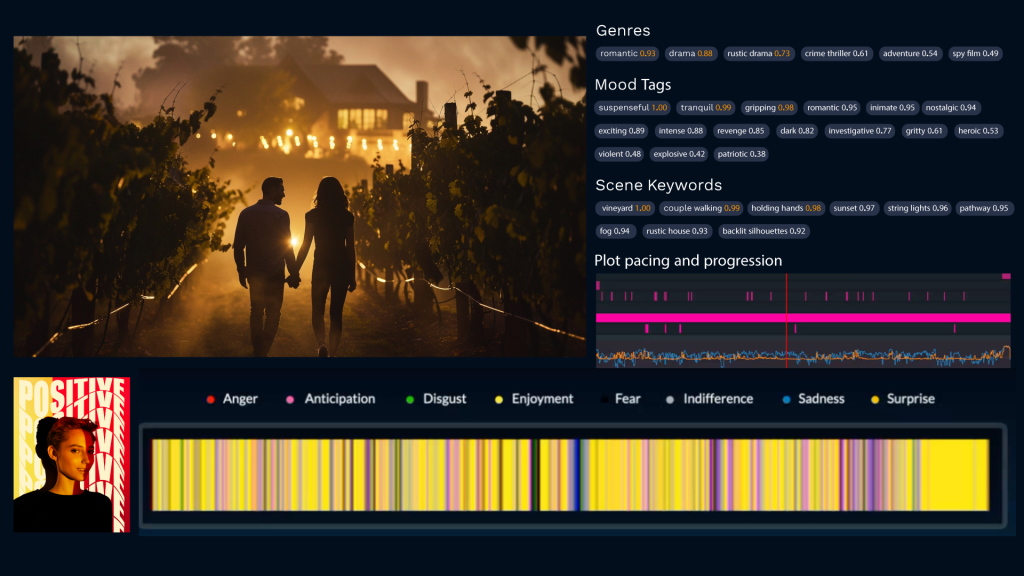
AI analysis result of a cinematic scene showing a couple walking through a sunset vineyard, with analytics displaying scene genres, mood tags, keywords, pacing timeline.
Accelerate FAST Revenue Growth with AI-driven Contextual Ad Targeting
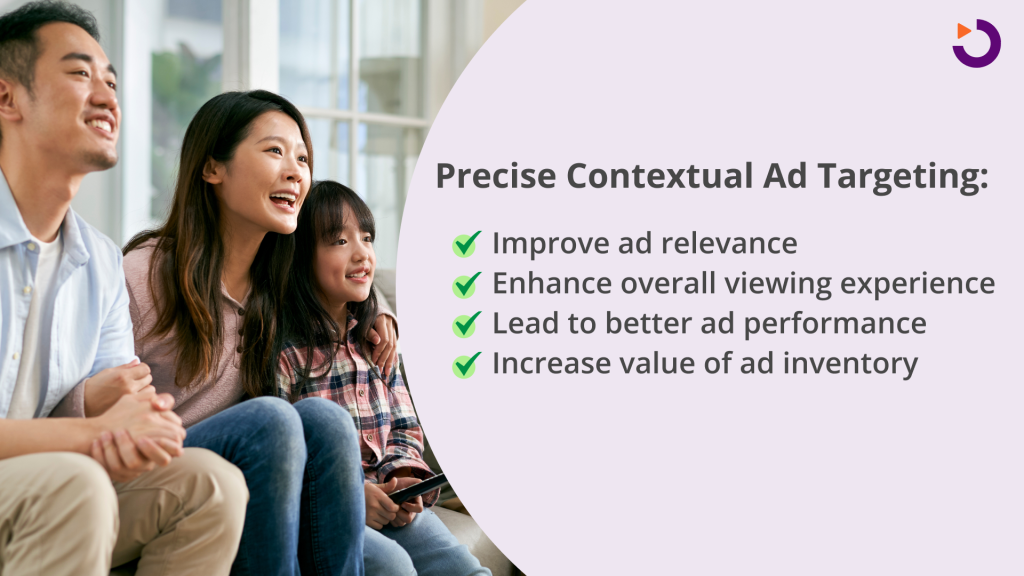
In FAST environments, richer content intelligence offers advertisers to gain precise contextual insights into what scene appears before each ad break, encouraging higher spending on targeted ad placements. Ads can be aligned not only with the content genre but also with the specific scenes and moments the audiences are watching in a lean-back experience. This improves ad relevance and overall viewing experience, leading better ad performance during premium ad time for FAST. It ultimately increases the value of ad inventory and drives FAST revenue growth.
AI Enhances Brand Safety Through Contextual Ad Placement
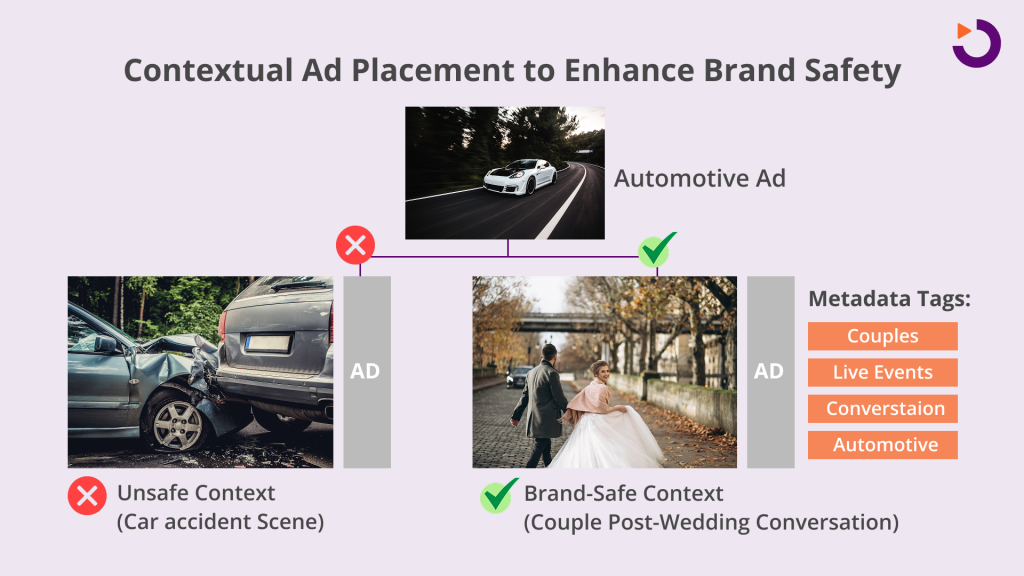
In the meantime, AI enhances brand safety by ensuring that advertisements appear in suitable contexts and avoid sensitive or inappropriate scenes. This improves campaign effectiveness and strengthens advertiser trust, which supports higher ad demand and stable the ad inventory value.
For example, an automotive brand placing ads on a drama FAST channel may want to avoid scenes involving car accidents. With AI-driven content analysis, the system can scan the entire drama and automatically tag detailed metadata for each scene. This allows the automotive ad can be placed in the most suitable context, such as immediately after a scene tagged with “Couples”, “Conversation”, “Automotive” and “Life Events”, where the main characters, a couple is discussing purchasing a car after their wedding.
SeaOvers Media Suite — AI-Powered IAB Taxonomy Tagging for FAST Monetization
SeaOvers Media Suite is an end-to-end platform for FAST channel creation, distribution, and monetization that integrates AI-driven scene analysis. It generates structured metadata in alignment with the Interactive Advertising Bureau (IAB) taxonomy, an industry standard widely adopted by advertisers, ad agencies, and programmatic platforms to match the inventory with relevant ad campaigns. Using four trained AI models, content is analyzed and ranked from one to four to identify the scene and moment with most appropriate advertising placement. In the screenshot of SeaOvers Media Suite below, after AI completes its analysis, the platform maps content to IAB categories and identifies ad insertion opportunities accordingly, prioritizing categories such as “Food & Drink”, “Automotive” (especially SUVs) and “Home Appliances” as key signals for delivering relevant ads.
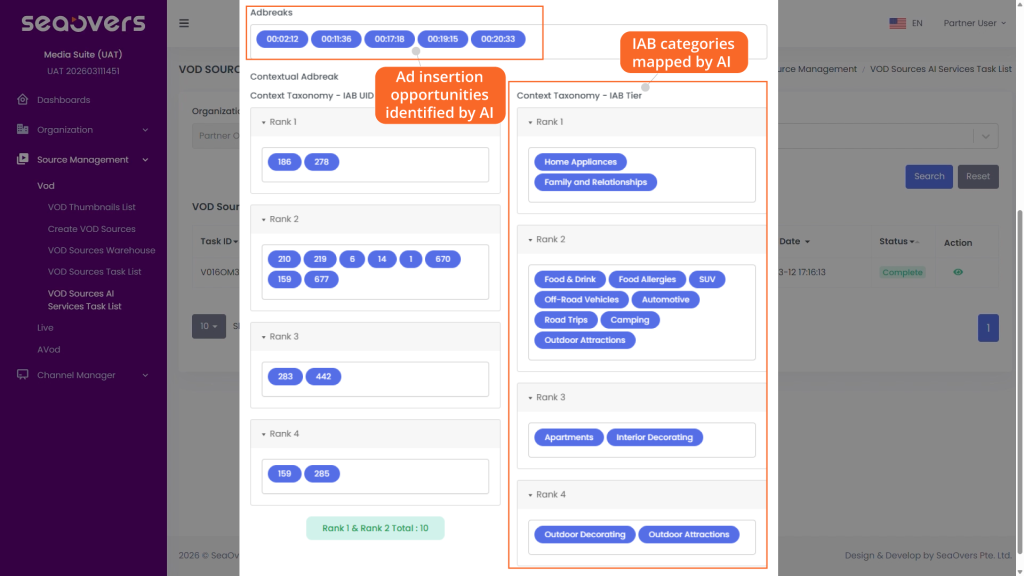
Adopting AI-driven contextual metadata tagging in FAST creates a win-win situation for both content providers and advertisers. Advertisers gain access to premium ad slots with improved Return on Ad Spend (ROAS), while content providers achieve higher content revenue through AI-driven content analysis that improves ad slot relevance and monetization efficiency.
If you’re interested in exploring what the SeaOvers Media Suite can do for you, please get in touch with us to book a demo. Want to get the latest updates of SeaOvers? Don’t forget to follow our LinkedIn.


